


Why does the suspension creak?
27 Mar 2026 2 min
Have you noticed that your car pulls to the side when you're driving straight ahead? Has your fuel consumption increased, or are your tires wearing unevenly? These are problems that many car owners experience without understanding why. Here we go over one of the most common causes behind these problems – and how you can avoid them!
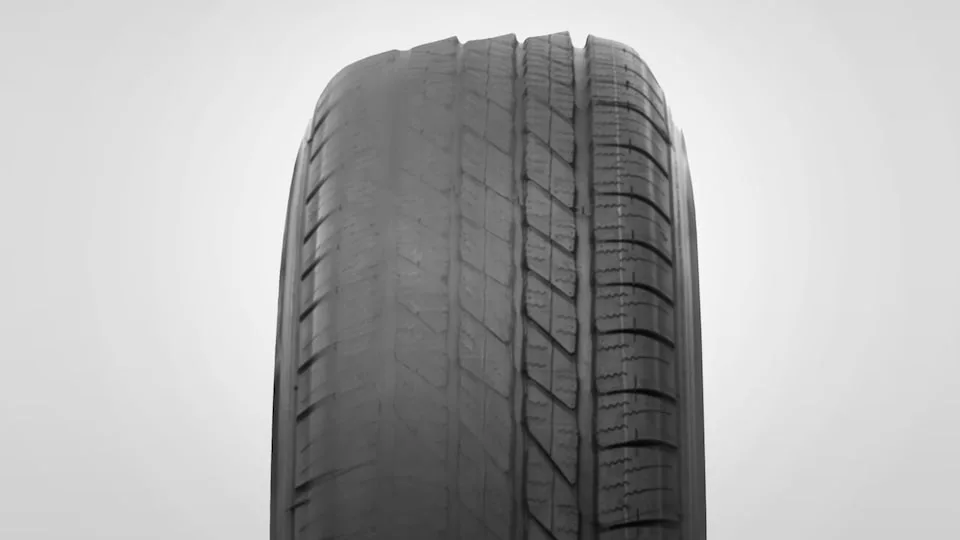
If your tire looks like this, it's too late. Uneven wear is often a clear sign of incorrect wheel alignment.
A wheel alignment is not about the wheels themselves, but rather the car's suspension of the wheels. A wheel alignment involves checking and adjusting the car's wheel angles so that all four wheels are correctly aligned with the car. This reduces the risk of tire wear while increasing safety with improved road holding.
Incorrect wheel alignment comes with several risks.
First of all, tires wear out more when the wheel alignment is incorrect. They wear faster and often wear unevenly, which shortens their lifespan.
If your car has incorrect wheel alignment, the car may start to pull to one side and feel unstable on the road, which reduces your safety in traffic.
Another negative consequence of incorrect wheel alignment is increased fuel consumption. When the wheels are incorrectly aligned, they do not roll optimally in relation to the car, which creates increased rolling resistance against the road. This means that the engine has to work even harder and fuel consumption increases.
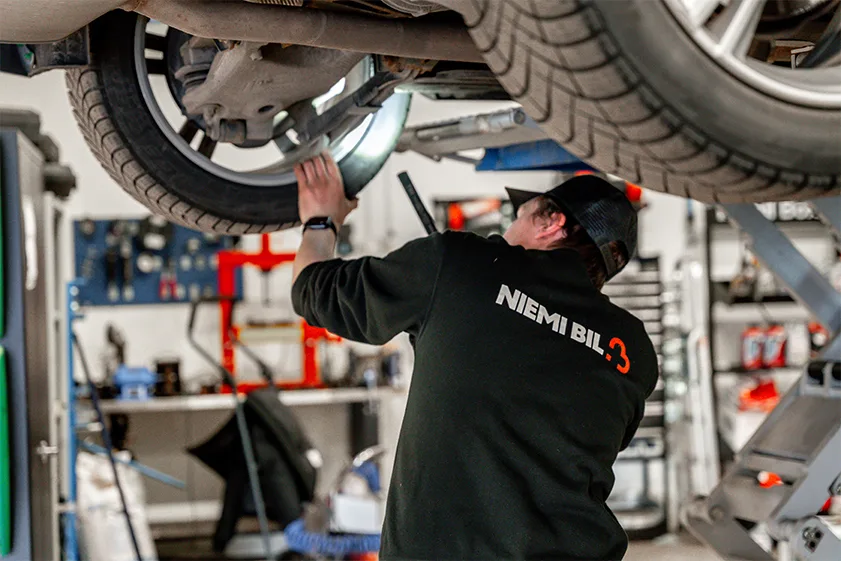
When you check your wheel alignment, you reduce the risk of expensive repairs and long-term problems.
The most common reason for incorrect wheel alignment is impacts, collisions or heavy blows.
For example, when you drive on a high curb, drive into a pothole or larger bump and the car receives a stronger impact, the wheel alignment can be disrupted because the suspension receives a blow against itself, which can change the angles.
Natural wear and age can also impair wheel alignment as important components can become worn and break.
Making changes to the car can also lead to changed wheel alignment. For example, modifying the car's suspension can cause the wheel alignment to no longer be correct and should be adjusted.
Basically, you should check your wheel alignment once a year to avoid major problems with your car.
If you drive into a large pothole or if the car takes a major hit in another way, it is also worth checking the wheel alignment to avoid increased wear and expensive repairs.
Incorrect wheel alignment can cause the car to pull to one side, tires to wear unevenly and fuel consumption to increase. A wheel alignment involves adjusting the angles of the wheels so that they are correct in relation to the car. Improper wheel alignment often occurs after impacts, potholes or natural wear and should be checked regularly to increase safety and reduce unnecessary wear.
Things in this article that we can help you with:
This question was answered by:

Olga Granbom
Workshop Manager, Niemi Bil Spantgatan, Luleå
27 Mar 2026 2 min
Feb 13, 2026 4 min
Feb 6, 2026 3 min